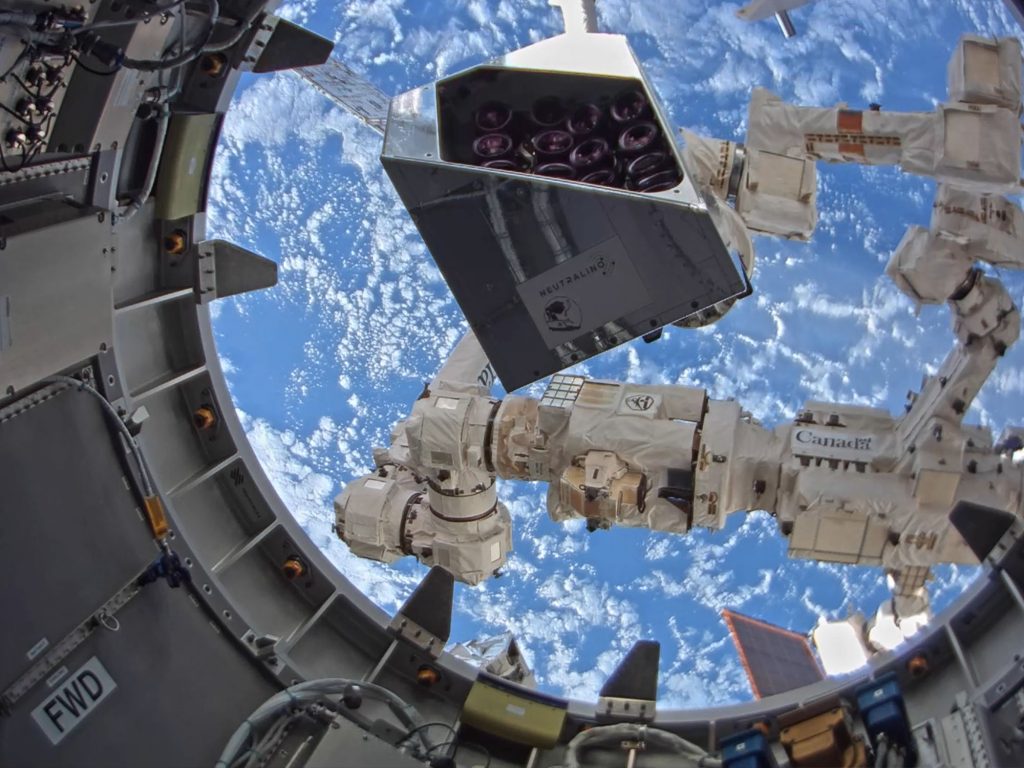
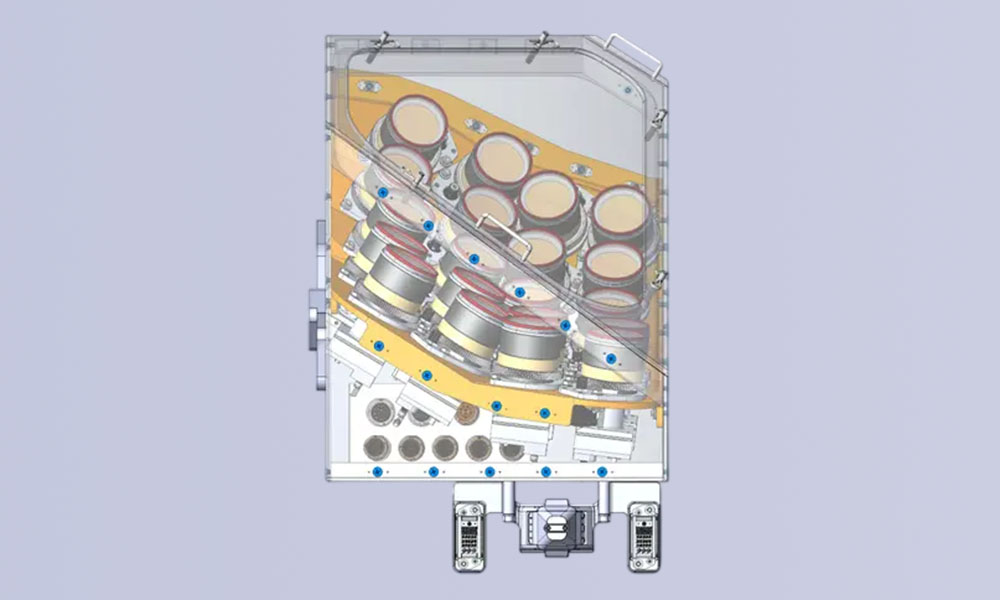
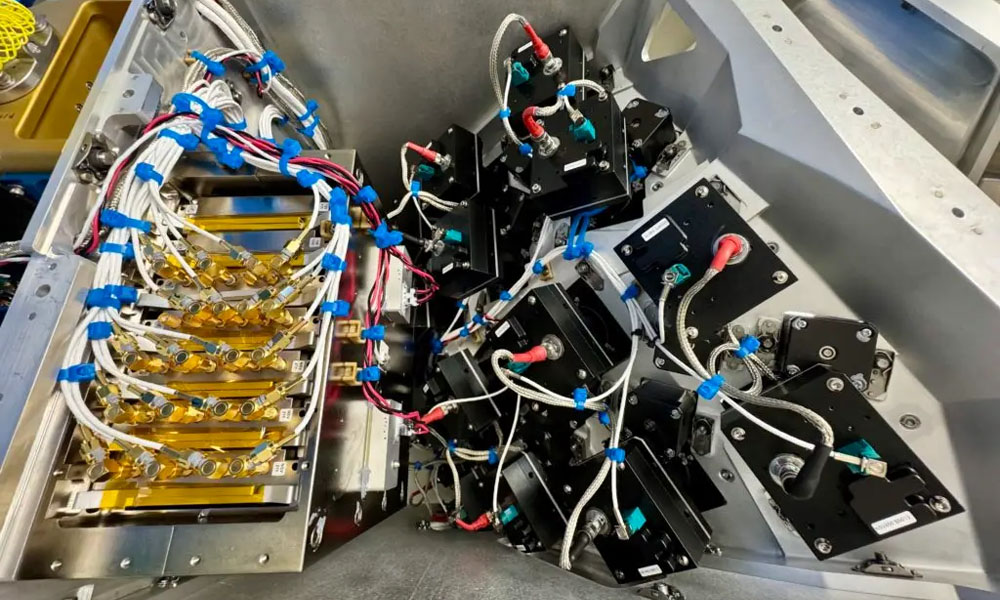
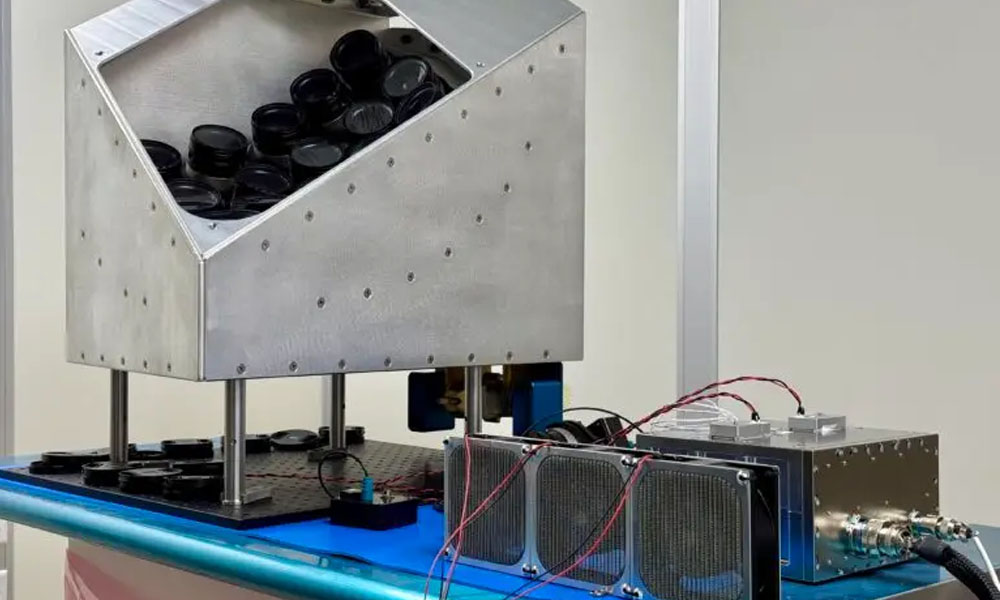
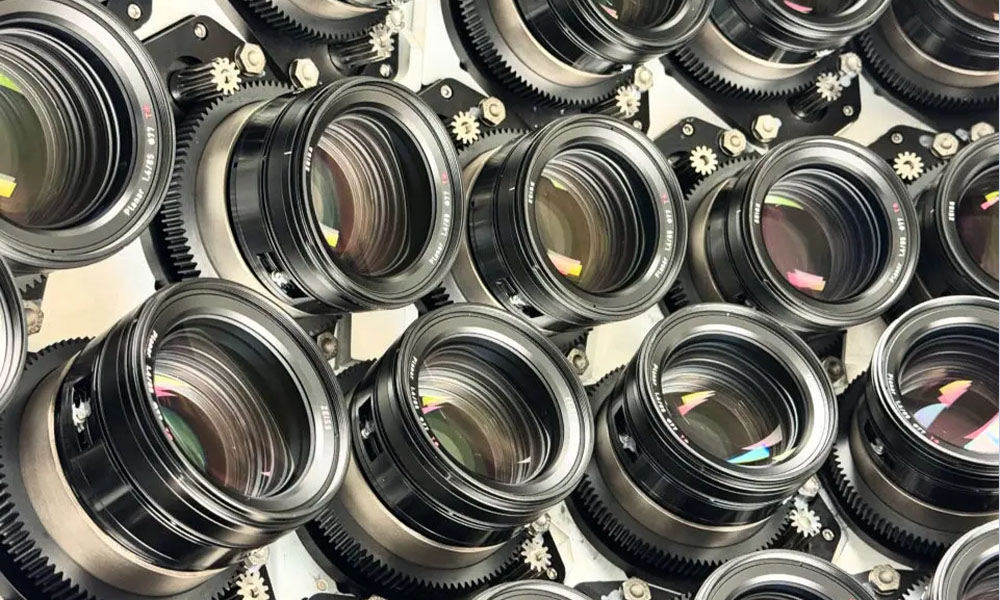
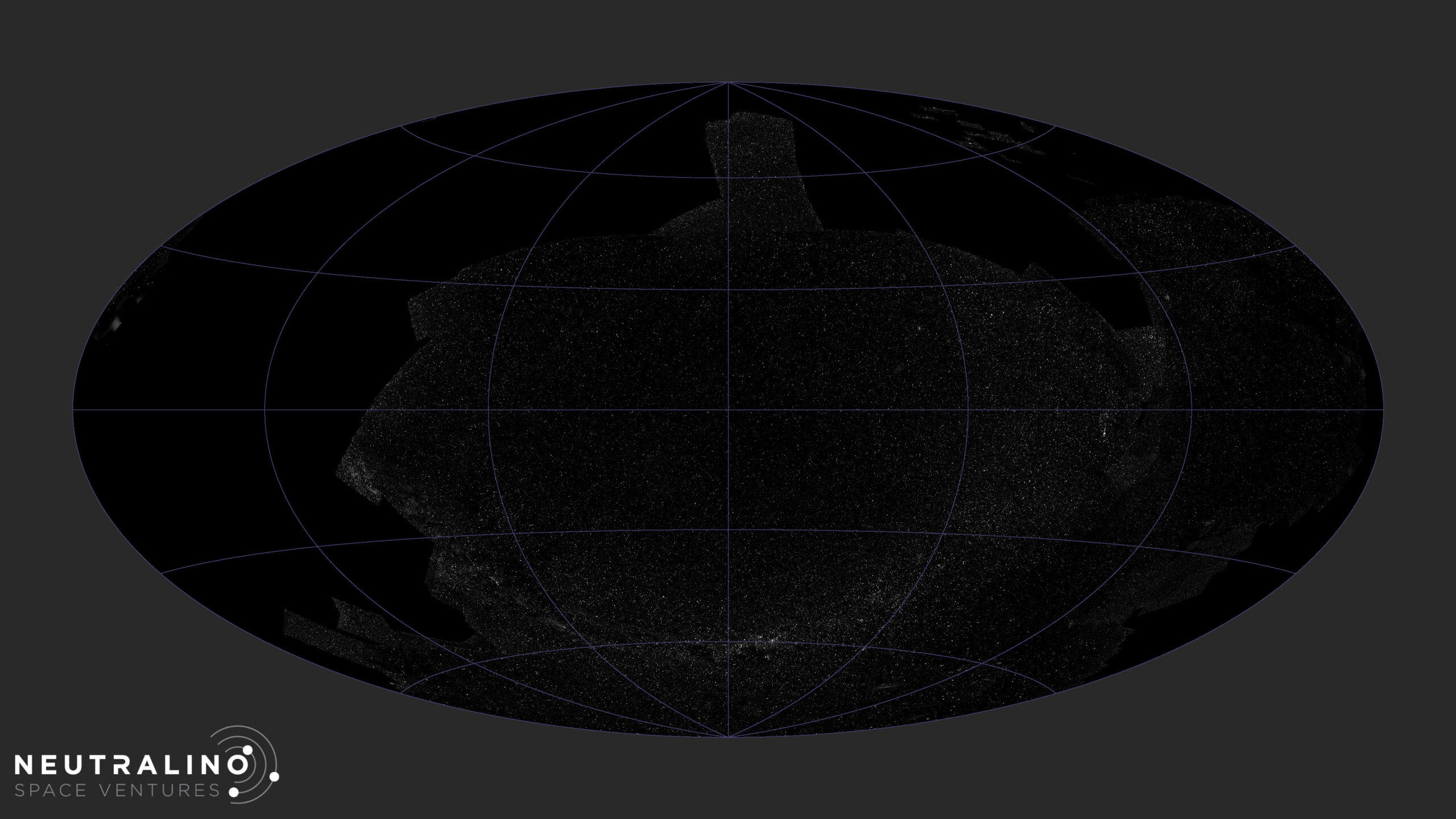
The ISS Surveyor instrument images the night sky with a 1,076-megapixel, wide-field mosaic camera, using a multi-teraflop-per-second computing cluster and sophisticated on-orbit algorithms to enable terabit-per-second sensing and real-time data analysis. It is deployed on the International Space Station as a technology demonstration of the Space Domain Awareness capabilities of the TeraDCTL edge-computing camera system. As it undergoes commissioning and science operations, Surveyor is paving the way for operational deployment of the multi-node SpaceSurvey constellation, which will monitor every significant object in low Earth, medium Earth, geosynchronous, and cislunar orbits by 2030.
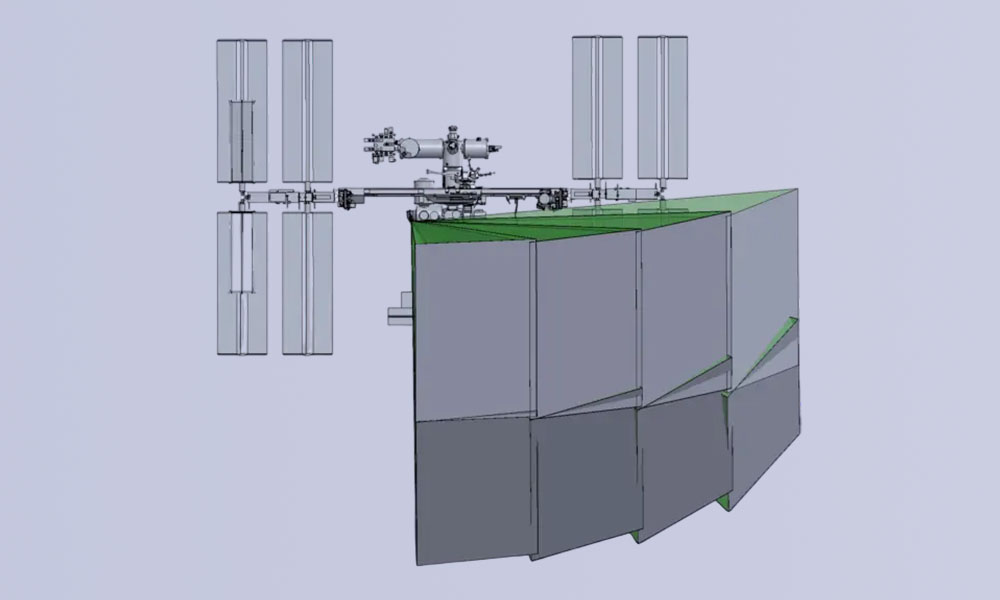
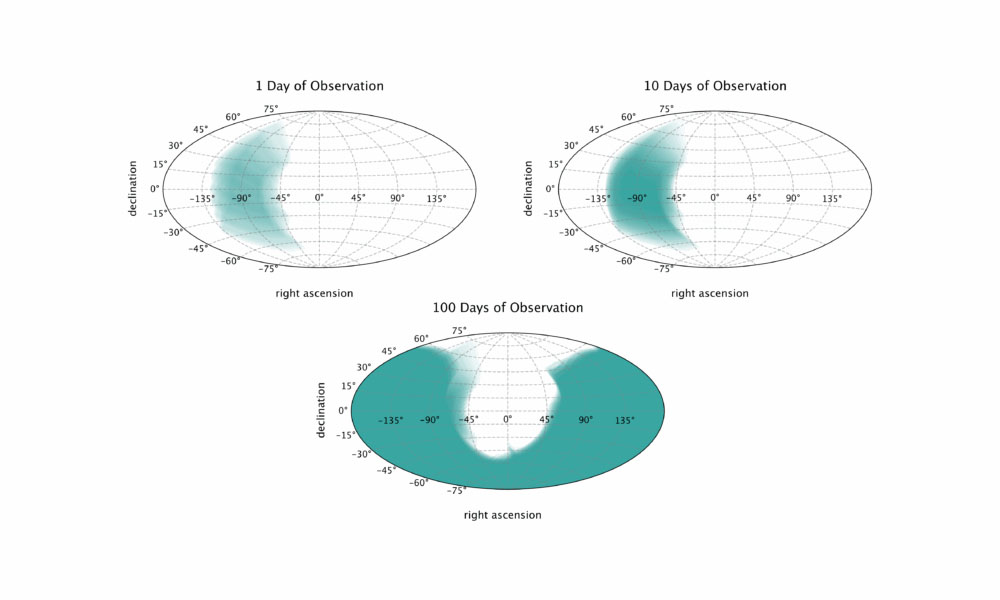
ISS Surveyor is installed externally on the International Space Station in a zenith-facing location. As the station orbits, the body-fixed camera array experiences approximately 30 minutes in eclipse. It is designed to operate autonomously on orbit, taking images when in eclipse and reducing data while the instrument is in sunlight. Using the sweeping of the station’s orbital motion, ISS Surveyor can image a swath of 175 degrees by 45 degrees every 93-minute orbit.
The overlapping fields of view provide coverage of the night sky in multiple astronomical filter bands at up to four frames per second, providing a detailed time-lapse image. ISS Surveyor is capable of generating ten gigabytes of data per second, and onboard edge-computing is used to reduce the data to a daily download not to exceed ten gigabytes per day. During commissioning, downloads consist of the engineering data needed to confirm the computer and array operation and to guide algorithm tuning. The science phase includes a sequence of algorithm deployments: satellite detection and tracking, multispectral stellar light curves, and transient anomaly detection. The final phase of the initial six-month mission will consist of operationalizing the satellite detection mission and evaluating system performance.